Writing your Will is a fantastic, essential step towards protecting your family and ensuring your final wishes are respected. But once the document is signed and witnessed, a massive question remains: where should you store it?
At AFPS, I always remind my clients that only the original, signed version of your Will is legally valid. Scans, photocopies, or digital files simply will not cut it when it comes to administering an estate. If your executors cannot find that physical, original document when the time comes, the law may treat it as if you died without a Will at all—causing immense stress and delays for your loved ones.
Whether you want professional security, digital access, or a budget-friendly option, here are the main ways you can store your Will safely in the UK.
1. The Lifetime “Credit Card” Storage Scheme
For many of the families I support, I use a dedicated probate service provider that offers a brilliant, worry-free lifetime storage option.
For a one-off fee of £75, they will hold your original Will securely for your entire lifetime. What makes this service a firm favourite of mine is that you receive a physical card—the exact size of a credit card—to keep in your wallet.
This card features a unique reference number and explicit instructions on exactly how your executors can retrieve the original Will when needed, alongside copies for their records. It completely removes the guesswork for your family.
2. Countrywide Secure Storage & Digital Copy Service
If you prefer a blended approach that gives you digital peace of mind alongside physical safety, Countrywide offers an excellent subscription service.
For £40 per year, they will store your physical document in their secure archive. Crucially, this service also includes a certified digital copy of your Will, meaning you can easily view your wishes online whenever you need to check them.
3. HM Courts and Tribunals Service (HMCTS)
Did you know you can store your Will directly with the government? The HMCTS Probate Service allows you to safely deposit your Will for a small fee. It stays locked away securely in a government vault until you pass away, at which point your executors can officially apply to retrieve it. You can find out more about how to set this up directly on the Gov.uk HMCTS Portal.
4. The National Wills Register
Regardless of where you physically put your Will, you can also consider registering its location with the Certainty National Wills Register. They do not hold the physical document itself, but they record where it is kept. Think of it as a national map for your executors—if they ever forget which firm or vault is holding your Will, a quick search on the National Wills Register will point them in the exact right direction.
Keeping Your Will at Home: If You Must, Do It Safely
Many people prefer to keep their Will at home, which is absolutely fine as long as you take the proper precautions:
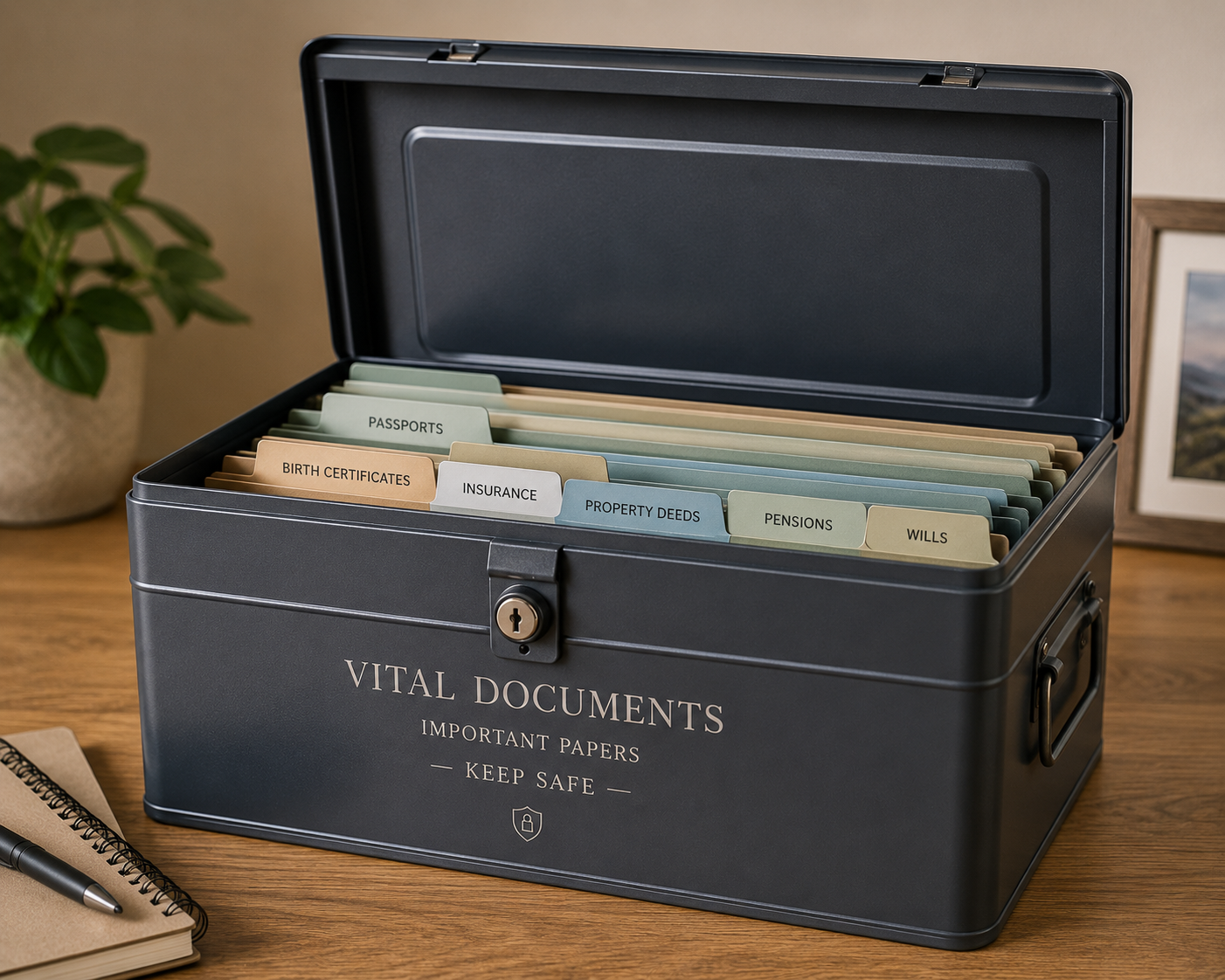
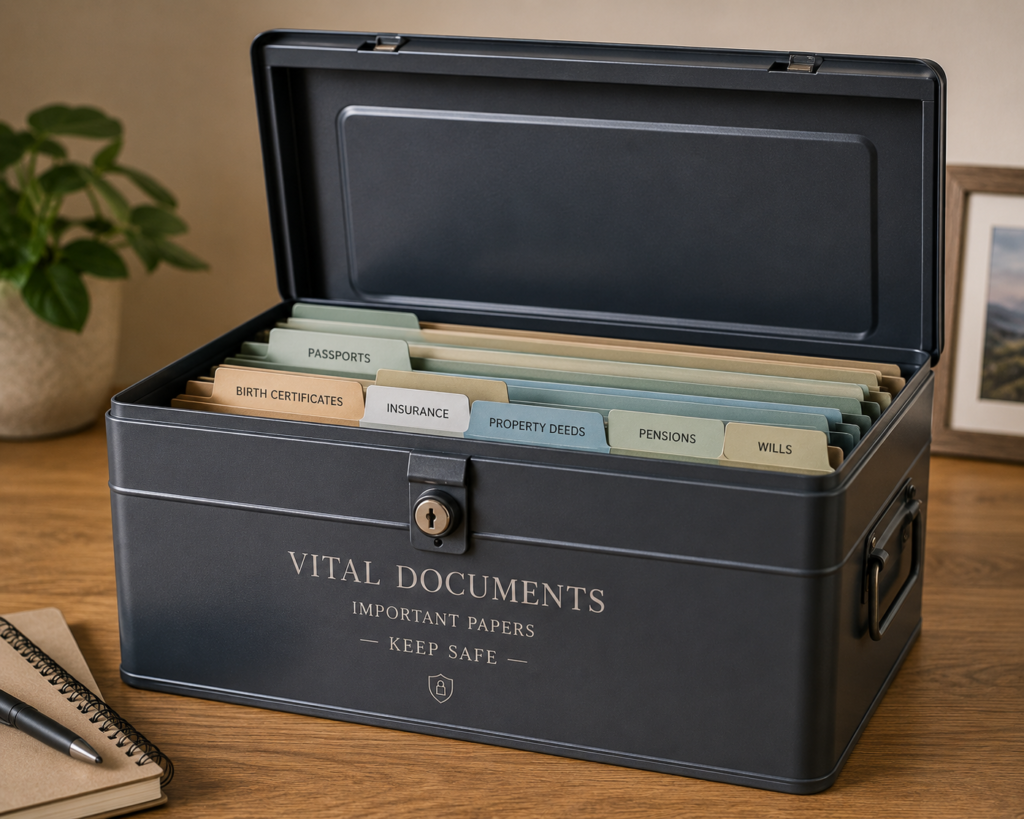
Protect against disaster: Do not leave it loose in a drawer. Store it in a lockable, fireproof, and waterproof metal box. The “Life File”: Keep it alongside all your other vital supporting documents, such as property deeds, life insurance policies, and pension details.
No paperclips or staples: Never attach anything to your original Will, as the marks left behind can raise legal questions about whether pages have been altered or removed. Keep Your Executors in the Loop
The golden rule of estate planning is communication. You must talk to your chosen executors. Let them know they have been appointed, explain where the original Will is being stored, and tell them exactly how to access it.
Keeping them in the loop now saves an enormous amount of emotional distress later.
Not Got a Will Yet?
Storing a Will is only a problem if you actually have one in place! If you haven’t yet written your Will, or if your current one is outdated due to a change in circumstances, let’s get it sorted.
Contact me at AFPS today for an initial consultation, and let’s ensure your family’s future is fully protected.